
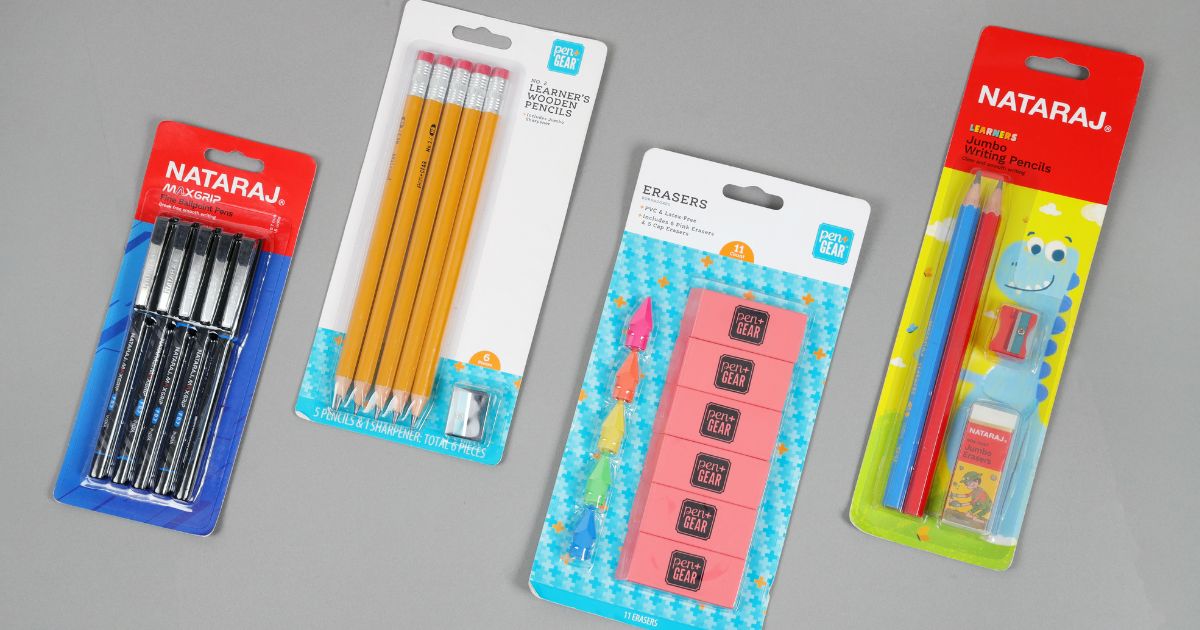
Blister card packaging is one of the most widely used retail formats across multiple product categories — and one of the most underspecified when brands brief their packaging manufacturer.
Procurement managers and packaging development teams who understand exactly what a blister card is, how it is manufactured, and what it needs to deliver for their specific retail environment make better sourcing decisions, get more accurate quotes, and avoid the most common blister packaging failures at retail.
This article covers all of it — clearly, without jargon.
What Is Blister Card Packaging
A blister card pack has two components.
The first is the blister — a thermoformed dome or cavity made from a transparent plastic substrate, shaped to fit the product it will hold. The blister is formed by heating a flat plastic sheet and pressing or vacuum-forming it over a mould until it takes the shape of the product cavity.
The second is the backing card — a printed paperboard card that carries the brand graphics, product information, certifications, barcode, and any regulatory or compliance text required for the product.
The blister is sealed to the backing card — either by heat sealing, where the flange of the blister dome is bonded to a heat-activated coating on the backing card under heat and pressure, or by stapling or trapped blister construction depending on the application.
The finished pack presents the product visibly through the transparent blister dome while the printed backing card carries all brand and product communication. It hangs on a standard peg hook via a euro slot punched into the top of the backing card — or stands in a display tray or countertop unit depending on the retail format.
Globe Print n Pack manufactures heat-sealed blister card packaging using PET substrate for the blister component and printed paperboard for the backing card — both produced in-house.
Blister Card vs Clamshell — The Distinction That Matters
These two formats are frequently confused in packaging briefs and the confusion leads to incorrect quotes and wrong specifications.
A blister card pack is open-backed. The product sits in a thermoformed PET dome on one side. The other side is a flat printed paperboard card. The two are sealed together. The pack is typically not designed to be opened and reclosed — once the blister is separated from the card, the pack is finished.
A clamshell is a fully enclosed thermoformed plastic shell — two halves joined by a hinge, with no backing card. The product sits inside the shell, which closes and latches. A printed insert card sits inside the clamshell behind the product. A clamshell can be opened and reclosed — relevant for products a consumer may access repeatedly.
The choice between the two formats depends on the product, the retail environment, and the consumer interaction required. Products that need to be displayed on peg hooks in a standard retail bay — small tools, accessories, personal care items, stationery — typically use blister cards. Products that need to stand on a shelf, show the product from multiple angles, or allow consumer access without destroying the pack — toys, gift sets, premium stationery — often use clamshells.
Confirm which format your product requires before briefing your manufacturer. The tooling, manufacturing process, and unit cost are different for each.
How a Blister Card Pack Is Manufactured
Understanding the manufacturing process helps procurement teams brief their vendor correctly and evaluate quotes accurately.
Step 1 — Thermoforming the blister A flat PET sheet is fed into a thermoforming machine. Heat softens the sheet, and a mould forms the cavity to the exact shape and depth of the product. The flange — the flat border around the cavity — is the surface that will be sealed to the backing card. Blister depth, cavity shape, and flange width are all specified by the manufacturer based on the product dimensions.
Step 2 — Printing the backing card The paperboard backing card is printed on a commercial offset press. At Globe Print n Pack this is the Komori Lithrone 7-colour press with UV coater — capable of full multicolour print plus spot colours plus inline UV coating in a single pass. The backing card carries the full brand artwork, product information, barcode, and any required certifications. Finishing options include matte UV, gloss UV, spot UV, hot stamping, and embossing.
The heat-seal coating — the layer on the backing card that bonds to the blister flange under heat — is applied as part of the card production process.
Step 3 — Loading and sealing The product is placed in the blister cavity. The printed backing card is positioned behind the loaded blister. Heat and pressure are applied to seal the blister flange to the backing card at the contact points. The seal must be strong enough to survive transit and retail handling without delaminating — but the card stock and seal specification are calibrated to allow the consumer to open the pack without requiring tools.
Step 4 — Euro slot punching and finishing The euro slot — the D-shaped hole at the top of the backing card through which the pack hangs on a peg hook — is punched as part of the finishing process. Additional die-cutting, perforations, or shaped card profiles are applied at this stage.
Industries That Use Blister Card Packaging at Scale
Toys and Children’s Products
Blister card packaging is the dominant retail format for small toys, figurines, accessories, and play sets sold in modern trade and toy retail. The format allows the toy to be displayed visibly — a child can see the product through the blister dome — while the backing card carries age rating, safety certifications, BPA free and non-toxic claims, and brand graphics.
For toy brands, the backing card print quality matters significantly. A toy aisle in modern trade is visually competitive. The backing card is doing the same job a display advertisement would do — attracting attention, communicating value, and triggering a purchase decision in seconds.
Globe Print n Pack manufactures blister card packs for the toy and children’s product category — blister dome in food and toy contact compliant PET, backing card printed on the Komori press to commercial FMCG-grade quality.
Stationery
Pens, pencils, erasers, sharpeners, correction tools, small geometry instruments, and stationery accessories are routinely packed in blister card format for modern trade and stationery retail. The format maximises peg hook density — a standard retail bay can carry significantly more units in blister card format than in box format — and allows the product to be seen before purchase.
For stationery brands managing a range of SKUs across multiple retail channels, the blister card format offers a cost-effective way to retail-ready a broad product range with consistent brand presentation. The backing card design changes per SKU while the blister tooling can often be shared across products of similar dimensions.
Globe supplies blister card packaging to stationery brands and is equipped to manage multi-SKU blister programmes from one facility.
Hardware and Tools
Small hand tools, drill bits, fixings, fasteners, cable ties, and hardware accessories are one of the largest blister card packaging categories globally. The format is standard in DIY retail, hardware stores, and the hardware sections of large-format modern trade.
For hardware and tools brands, the blister card specification requirements differ from toys or stationery. The blister dome needs to be deeper and structurally more robust to hold heavier products. The seal strength needs to be higher to prevent product movement or seal failure when the pack is handled repeatedly on a retail peg. The backing card needs to carry technical specifications — dimensions, material grade, load rating, compatibility — alongside brand graphics.
Globe Print n Pack manufactures blister card packaging for hardware and tools applications — with PET blister specification confirmed against product weight and retail handling requirements at the brief stage.
Personal Care Accessories
Razors, nail care accessories, hair clips, brushes, applicators, grooming tools, and personal care accessories are widely retailed in blister card format across pharmacy, modern trade, and personal care specialty retail.
For personal care brands, the backing card design is as important as the blister specification. The category is visually competitive and the backing card needs to communicate the product benefit, the brand identity, and any clinical or dermatological credentials — clearly, in limited space, at a scale readable from a retail bay distance.
Globe manufactures blister card packs for personal care accessories — with backing card print quality to the standard required for pharmacy and modern trade retail.
What to Specify When Briefing a Blister Card Manufacturer
Incomplete briefs produce inaccurate quotes. For blister card packaging, confirm the following before requesting a quote:
Product dimensions and weight. The blister cavity is tooled to the product. Exact dimensions — length, width, height or depth — and product weight determine the blister specification, the flange width, and the seal strength required.
Blister substrate. PET is the standard substrate for retail blister packaging — clear, rigid, food and toy contact compliant where required. Confirm the substrate at brief stage, not after tooling is made.
Backing card dimensions and shape. Standard rectangular cards are simplest to produce. Custom shaped cards — rounded corners, shaped profiles, unusual proportions — require additional die-cutting. Confirm the card shape and dimensions including euro slot placement.
Print specification for the backing card. Number of colours, any Pantone spot colours, finish requirements (matte, gloss, spot UV, hot stamping), and whether a heat-seal coating is required on the face that contacts the blister flange.
Seal method. Heat sealing is standard for most retail blister card applications. Confirm the seal method with your manufacturer and verify the seal strength specification against the product weight and retail handling requirement.
Retail environment. A blister card for a pharmacy shelf has different requirements from one for a DIY hardware store. Confirm where the pack will be displayed — the retail environment affects the specification for seal strength, card grade, and finish durability.
Order quantity. Blister card tooling — the mould for the thermoformed blister — has an upfront cost that is amortised across the production run. At Globe Print n Pack, standard MOQ is 15,000 units per SKU. Confirm your volume before requesting tooling to be made.
The Backing Card Is Not a Afterthought
One of the most common blister card specification mistakes is treating the backing card as a secondary component — something to print once the blister tooling is confirmed.
The backing card is the primary brand communication surface of the pack. In a retail environment where the consumer makes a purchase decision in seconds, the backing card is doing the work of an advertisement. Its print quality, colour accuracy, finish, and structural integrity determine whether the pack attracts attention and survives the retail programme.
A blister card with a high-quality PET dome and a poorly printed backing card underperforms at retail. The investment in the blister tooling is not recovered if the backing card does not hold up.
Globe Print n Pack produces both components in-house. The blister dome is thermoformed at our facility. The backing card is printed on the Komori Lithrone 7-colour press — the same press used for FMCG cosmetics and personal care carton production. Both components are produced under ISO 9001:2015 certified quality management and both are quality-checked before sealing and dispatch.
Frequently Asked Questions — Blister Card Packaging
What is the difference between a blister card and a clamshell? A blister card has a thermoformed PET dome heat-sealed to a flat printed paperboard backing card. The product is visible through the dome. A clamshell is a fully enclosed hinged plastic shell with a printed insert card inside — no separate backing card. Blister cards hang on peg hooks and are typically single-use. Clamshells can stand or hang and can be opened and reclosed.
What substrate is used for the blister dome? Globe Print n Pack uses PET (polyethylene terephthalate) for blister domes — clear, rigid, and available in food and toy contact compliant grades where required for children’s products or food-adjacent applications.
Can Globe manufacture custom shaped blister cavities? Yes. The blister cavity is tooled to the product dimensions. Custom cavity shapes, depths, and flange configurations are confirmed at the brief stage based on product dimensions and weight.
What printing options are available for the backing card? Backing cards are printed on the Komori Lithrone 7-colour press with UV coater. Options include full multicolour offset print, Pantone spot colours, matte UV, gloss UV, spot UV, hot stamping, embossing, and debossing.
What is the MOQ for blister card packaging at Globe? Standard MOQ is 15,000 units per SKU. This applies to both the blister component and the backing card. Tooling cost for the blister mould is confirmed at the quotation stage based on cavity complexity.
Does Globe supply blister card packaging outside Mumbai? Yes. Globe Print n Pack supplies nationally across India and to export markets. Delivery terms are confirmed at the order stage.
Can Globe handle a multi-SKU blister card programme? Yes. Multi-SKU programmes — where multiple products use the same or similar blister tooling with different backing card designs — are a standard workflow. Confirm your full SKU range at the brief stage to evaluate tooling sharing opportunities and programme pricing.
Working With Globe Print n Pack for Blister Card Packaging
Globe Print n Pack manufactures heat-sealed PET blister card packaging — blister dome and printed backing card — from our facility in Vasai, Mumbai. We supply to procurement teams at toys, stationery, hardware, personal care, and consumer goods brands. Standard MOQ is 15,000 units per SKU. We are ISO 9001:2015 and SEDEX certified.
Request a quote → View our blister card packaging → Explore our clear packaging → See our technology